
Master craftsman handyman services in Mt. Airy, PA. Door repair, window restoration, trim work, and all home repairs done right. 30+ years of craftsmanship.
Handyman in Mt. Airy, PA
Handyman services in Mt. Airy, Philadelphia County cover home repair and maintenance — door and window restoration, trim and cabinetry, kitchen and bathroom updates, deck and porch repair — performed in person by Fred Beese, a 30-year master craftsman specializing in Mt. Airy's pre-1920 Victorian twin and stone rowhouse homes.
Mt. Airy occupies a long, sloping corridor of Northwest Philadelphia between Chestnut Hill to the north and Germantown to the south, bisected by Germantown Avenue — the neighborhood's main commercial spine, lined with independent shops, cafes, and the offices of community organizations including the Mt. Airy Business Association. The neighborhood divides informally into West Mt. Airy and East Mt. Airy. West Mt. Airy runs from Lincoln Drive and the wooded escarpment of Wissahickon Valley Park eastward to Germantown Avenue, its streets defined by large stone singles and twins set back behind deep front yards. East Mt. Airy picks up east of Germantown Avenue and extends toward the Cheltenham township line, with denser streets of brick and stone twins and rowhouses that blend gradually into the adjacent neighborhoods of Germantown and, at the eastern edge, the Glenside and Cheltenham communities served by the 19038 ZIP code. Lincoln Drive cuts along the western edge of the neighborhood, tracing the Cresheim Creek valley and offering access to Wissahickon Valley Park, a defining natural feature for residents on the west side. SEPTA serves Mt. Airy on two commuter rail lines: the Chestnut Hill West line, with a stop at Mt. Airy station, and the Chestnut Hill East line, with stops at Upsal station and Mount Airy station. Allen's Lane crosses the neighborhood east to west and is home to the Allen's Lane Art Center, a community arts institution. Gowen Avenue and Emlen Street are among the quieter residential streets threading through the western section. The Lovett Memorial Library, a branch of the Free Library of Philadelphia, anchors community life near the Germantown Avenue corridor. The housing throughout — Victorian twins, stone-faced rowhouses, and scattered Craftsman bungalows from the 1920s and 1930s — gives Mt. Airy one of the most architecturally coherent streetscapes in the city.
Fred has worked in Mt. Airy long enough to know the particular way these houses age. The Victorian twins that line so many of the neighborhood streets were well-built for their era — solid stone or brick facades, old-growth wood framing, plaster over lath — but more than a century of Philadelphia winters and humid summers leaves its mark. On the typical Victorian twin in Mt. Airy, Fred watches for three issues: original double-hung windows with broken sash cords and failed glazing compound that has dried out and cracked away from the frame, letting drafts in and rot take hold in the sill; original plaster ceilings showing hairline cracks that have opened up over decades from the low-frequency vibration transmitted through the shared party wall every time the neighboring unit settles or the floors flex; and front porch floorboards rotted at the outside edge where they meet the stone facade, a spot that holds moisture and rarely dries out fully between rainstorms. The three-story layout common in these twins also shapes how projects run — moving materials up and down narrow staircases, working around original balustrades and wainscoting that deserve care rather than replacement. Heading south along Germantown Avenue into Germantown, the housing stock ages further and the repair challenges shift, but in Mt. Airy the consistent theme is thoughtful restoration: keeping what is original and repairable rather than defaulting to modern substitutes that will look wrong in twenty years. Fred works on one project at a time. Contact him through this site to discuss your project.
Get a Free Estimate View Main Handyman Page → Mt. Airy Area Guide →
Services in Mt. Airy, PA
Fred handles door and window repair, trim and plaster work, cabinetry, light fixtures, and general home repairs in Mt. Airy — fixed-price estimates, no hourly surprises.
01
Historic and contemporary doors — hardware restoration, adjustment, refinishing, and careful repair that maintains original character.
02
Sash window repair, glazing, weatherization, and restoration that preserves period windows rather than replacing them.
03
Cabinet refinishing, hardware installation, countertop updates, and practical improvements without full-scale renovation.
04
Fixture replacement, tile repair, vanity updates, and water damage restoration.
05
Custom trim installation, period-accurate baseboards, crown molding, and detailed millwork repair.
06
Cabinet repair, refinishing, custom shelving, and built-in installation and restoration.
07
Railing restoration, board replacement, refinishing, and structural repair done right.
08
Custom shelving installation, closet organization, and built-in storage solutions.
Recent Work Near Mt. Airy PA
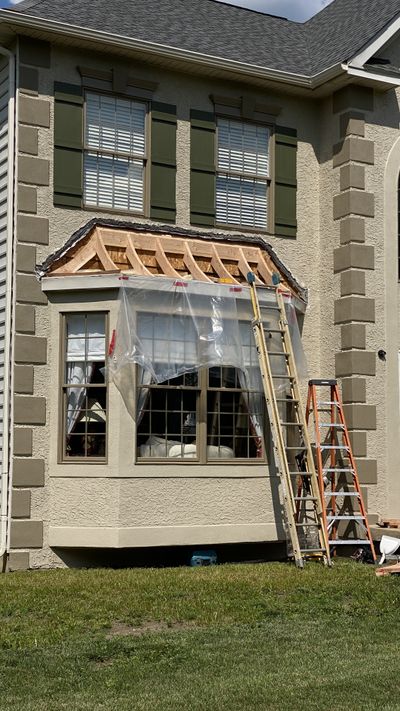
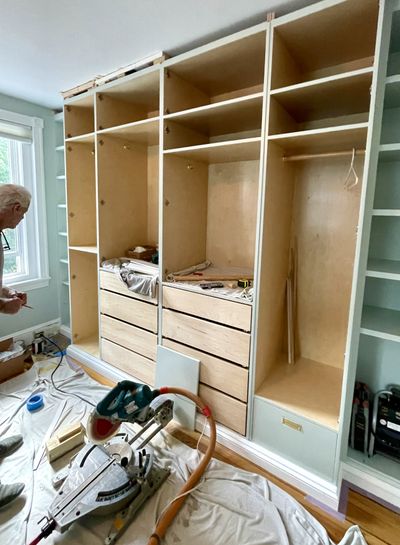
Philadelphia County · Pre-1920 Victorian & Late Victorian
Pre-1920 Philadelphia-area homes were built with old-growth heart pine, Douglas fir, and chestnut framing — denser and more rot-resistant than modern lumber. Exterior walls in Chestnut Hill and Wyndmoor are often Wissahickon schist; elsewhere, Philadelphia brick and lime mortar. Interiors are plaster-over-lath with horsehair-reinforced base coats. Windows are original single-pane sheet glass in divided-light sash, hung in frames with cast iron sash weights. All original trim was painted with oil-based paint over lead primer. Understanding these materials — how they fail, how they move seasonally, what will bond to them — shapes every repair decision on a home this old.
Rope-and-pulley sash window failures — counterweight ropes break after 80+ years, leaving sash that won't stay open; re-roping requires removing the sash and parting bead
Failed glazing compound on original single-pane glass — oil putty shrinks and cracks over decades, allowing moisture into the sash frame and starting rot at the bottom rail
Plaster keying failure at door and window header joints — seasonal structural movement breaks the mechanical bond between plaster and lath at lintels
Exterior wood rot behind added storm windows — vinyl or aluminum storms installed in the 1970s–80s trap moisture against original wood that was never meant to be sealed
Lead paint on all original trim, windows, and exterior surfaces — EPA RRP rules apply to sanding and disturbing lead-bearing paint
Original mortise lock and hinge hardware with worn or missing parts — replacement period-appropriate hardware often requires custom sourcing
On a pre-1920 home, the first thing Fred checks is the bottom rail of every sash window: that's where glazing compound failure drives moisture into the frame and starts rot before it's visible. Second is the exterior wood at storm window sills — the original sill was designed to drain, and when a storm window covers it, water traps against wood that can't dry. Third is the plaster at door and window headers: if you see a horizontal crack running across the top of an opening, the lintel is moving seasonally and the plaster key is failing — a predictable pattern that responds well to the right repair sequence before the plaster falls.
Why Fred for Mt. Airy's Pre-1920 Victorian & Late Victorian homes
Fred has worked on Victorian-era homes throughout the Philadelphia region for 30 years and understands their specific failure patterns. He uses period-appropriate repair techniques — oil-based glazing compound on original sash, epoxy consolidant before wood filler on rotted members, custom-milled trim profiles sourced to match existing millwork — rather than modern substitutes that don't hold or don't match the original character. On a pre-1920 home, the goal is always to preserve what is original and repairable, not to replace it with something faster or cheaper that will need to be done again in ten years.
Discuss Your ProjectHandyman Services Near Mt. Airy, PA
Fred serves Mt. Airy and the surrounding communities throughout Philadelphia County. If you're in a neighboring town, Fred's service area likely covers you — reach out to confirm.
Transparent Pricing
Most handyman jobs in Mt. Airy run $150–$800. Small repairs start around $150; window or trim work typically falls in the $350–$800 range. Fred quotes fixed prices — you know the cost before he starts.
Door adjustments, hardware installation, light fixture replacement, and minor fixes.
Window restoration, trim installation, bathroom fixture replacement, plaster repair.
Deck repair, multiple fixture installations, extensive plaster work, cabinetry repair.
Custom trim, shelving, built-in cabinetry, and specialized restoration — pricing per project.
Mt. Airy's Victorian twins and stone rowhouses often involve shared-wall considerations, three-story layouts, and original plaster and trim that require careful restoration work. City homes tend to have more vertical square footage, which can affect project logistics.
Fred works by fixed project pricing, not hourly rates. He visits your home, assesses the work, and provides a detailed estimate before starting. No surprises, no upselling — just transparent, quality work.
Common Questions
Pricing in Mt. Airy reflects the realities of the housing stock here. Victorian twins and stone rowhouses often involve shared-wall considerations, three-story layouts, and original plaster and trim that require careful restoration work rather than straightforward replacement. City homes tend to have more vertical square footage, which can affect project logistics — moving tools and materials up multiple flights of narrow stairs takes more time than working in a single-story suburban house. Fred provides honest, plain-language estimates before any work begins so you know what to expect.
Fred handles door repair and restoration, window repair and restoration, kitchen updates, bathroom repairs, trim and molding work, cabinetry, deck and porch repair, and shelving and storage — in that order of frequency in Mt. Airy. Because so many homes here are pre-1920 Victorians with original woodwork and plaster, a significant share of his work involves careful restoration rather than simple replacement.
Smaller repairs — a sash cord replacement, a sticky door, repointing a small section of mortar — often take a day or less. Larger projects involving multiple windows, porch reconstruction, or kitchen updates will run several days to a couple of weeks. Fred will give you a realistic timeline during the estimate conversation, not an optimistic one.
Fred Beese does the work himself. He is a 30-year master craftsman who takes on one project at a time, which means no rotating crews cycling through your home and no subcontractors showing up in his place. You deal with Fred from the first conversation to the last nail. He believes in plain-language communication about what your home needs — no upselling, no vague estimates, no surprises.
Yes — Victorian twins are the dominant housing type in much of Mt. Airy and make up a large portion of Fred's work in the neighborhood. He is familiar with the shared-wall construction, the three-story layouts, and the original materials — plaster, old-growth fir and pine, single-pane double-hung windows — that define these homes.
The most frequent issues Fred sees in Mt. Airy Victorians are: failed sash cords and glazing on original double-hung windows, hairline plaster cracks on ceilings (often from shared-wall vibration), rotted porch floorboards at the stone facade edge, paint-stuck interior doors that have swollen and drifted off plumb over decades, and trim profiles that have been patched or replaced with mismatched stock profiles. Most of these are repairable rather than requiring full replacement.
Yes. Fred restores original double-hung sash windows rather than replacing them. He re-ropes sash cords, resets weights, reglazed failed glazing compound, and reseats sashes that have warped or drifted. A properly restored original wood sash window outperforms most replacement windows and preserves the character of the home — which matters in a neighborhood like Mt. Airy where architectural integrity is part of what makes the housing stock valuable.
Yes. Shared party walls in twins and rowhouses require care — vibration and sound transmission from demo work affect the neighboring unit, and structural interventions near the party wall need to be thought through carefully. Fred plans work with that in mind and communicates clearly about what is involved before starting.
Fred's first instinct is always to repair. Original plaster ceilings in Mt. Airy Victorians are often in better shape than they look — hairline cracks from vibration or seasonal movement can be stabilized and filled without a full teardown. Replacement with drywall is faster and cheaper upfront but loses the mass and texture of the original. Fred will tell you honestly which approach makes sense for the specific ceiling in front of him.
Yes. Fred works throughout both West Mt. Airy and East Mt. Airy. The housing character shifts somewhat between the two sides — larger stone singles and twins on the west, denser brick and stone twins and rowhouses on the east — but the era and construction methods overlap enough that the same skills apply across the full neighborhood.
Yes. Matching period trim profiles is a standard part of Fred's work in Mt. Airy. Victorian interiors often have distinctive baseboard, casing, and crown profiles that have been discontinued. Fred locates matching stock where it exists and, when it does not, works with a profile that reads correctly in context. The goal is a repair that does not announce itself.
Yes. The streets bordering Lincoln Drive and the Cresheim Creek valley on the western edge of West Mt. Airy are in Fred's regular working area. Homes on this side of the neighborhood tend to be larger and more heavily landscaped, and porch and exterior wood repairs often involve exposure conditions shaped by the wooded, shaded setting.
Handyman Mt. Airy, PA
Fred works with a small number of Mt. Airy clients at a time — which means your project gets his full attention, expertise, and 30+ years of craftsmanship. Reach out to discuss what your home needs.
Get a Free Estimate
Tell Fred what you need — he returns every call and text himself, usually within 24 hours. No call center, no crews, no spam.
What Clients Say
“We initially hired Fred to build a bedroom closet for us, and his work has been truly exceptional. His attention to detail, combined with a strong sense of aesthetics, is rare to find. He takes the time to refine every aspect of the work.”
“We had a fantastic experience working with Fred Beese! His communication was incredibly clear from start to finish, so we always knew exactly what to expect. His prices are reasonable, but what really sets him apart is his vision — he offered suggestions that elevated the final result.”
“Fred is truly an artist. He built a fence for me and collaborated every step of the way. I highly recommend him especially if you want the end result to be outstanding and beautiful.”
“Fred is an outstanding contractor. His communication skills are excellent. He keeps you informed every step of the way and is extremely easy to work with. His attention to detail really sets him apart, and it shows in the quality of his work.”
“Fred Beese has done much work for me on my house over the years both as a craftsman and as a contractor. His work is uniformly excellent. He is responsible, meticulous, very knowledgeable across the range of construction skills.”
“Fred does excellent work! He can do pretty much anything you need done from electrical to carpentry. He is a pleasure to work with.”
Tell us about your project and Fred will be in touch within 24 hours.