
The right light transforms a space in ways that most contractors — and even most designers — never fully appreciate. Fred does.
A Credential No Other Contractor Has
Residential lighting design in Chestnut Hill, Wyndmoor, and Montgomery County, PA runs roughly $1,500–$4,000 for a single-room renovation and $8,000–$30,000+ for a full-home design and installation — created and installed by one craftsman, Fred Beese, a Hollywood film lighting veteran with 30+ years of professional experience with light.
Before Fred Beese built homes, he lit films. His career as a Hollywood lighting professional — working on productions with directors like Wes Craven and Stephen Frears — gave him a depth of knowledge about light that simply doesn't exist in the residential construction world.
Film lighting is about emotion, architecture, and human perception. It's about understanding how light falls on surfaces, how it creates depth in a space, how warm and cool sources interact, how a well-placed fixture can make a room feel entirely different from the same room poorly lit. These aren't abstract principles — they're technical skills Fred developed over decades of professional work.
When Fred designs residential lighting, he brings that same professional precision. He's not choosing fixtures from a catalog — he's designing a lighting system for your specific space, your specific architecture, and the moods and activities it needs to support. And then he installs it himself.
Get a Free Estimate View Portfolio →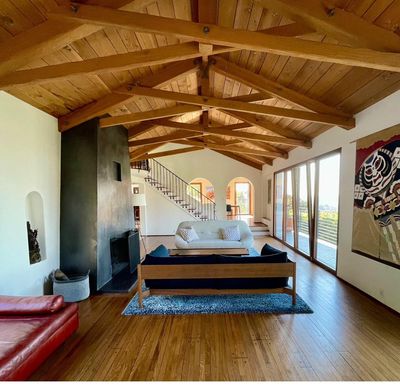
What We Do
Fred offers architectural interior lighting design and installation — from layered ambient and task plans to energy-efficient LED transitions. For technical guidance on lighting efficiency and quality, the U.S. Department of Energy maintains resources on modern lighting options and energy savings.
01
Recessed lighting layouts, cove lighting, accent lighting, and task lighting designed as a unified system — not individual fixture choices. Layer plans that work together across ambient, accent, and task functions to make your rooms feel as good in the evening as they do during the day.
02
Path lighting, uplighting, downlighting, and facade lighting designed with the same intentionality as interior work. For the older homes of Chestnut Hill and Wyndmoor — with their stone facades, mature trees, and architectural details — the right exterior lighting is transformative. Done wrong, it's just glare.
03
For spaces where standard fixtures don't exist or don't fit, Fred designs and fabricates custom fixtures — or sources exceptional period fixtures for historic homes. If you have a specific aesthetic in mind, Fred can usually make it happen in ways that surprise even clients with strong design instincts.
04
Dimming, scene control, and smart home integration that actually works — and actually makes sense in your home. Fred designs control systems that are intuitive, not complicated. The goal is lighting that responds to how you live, not a tech demo that impresses guests once and then confuses everyone.
05
Adding modern lighting to a Victorian, Tudor Revival, or Craftsman home requires genuine sensitivity to the architecture. The fixture types, color temperature, and placement decisions all affect whether the lighting honors or fights the home's character. Fred understands the difference — and designs accordingly.
06
Existing lighting systems that aren't working — dated fixtures, poor layout, wrong color temperature, inadequate dimming — redesigned and replaced. Fred can work with existing wiring where appropriate or design a fully new system when the scope warrants it.
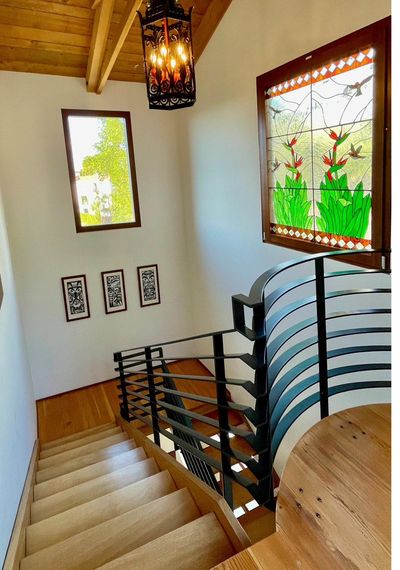
Selected Work
Chestnut Hill, PA
Philadelphia, PA
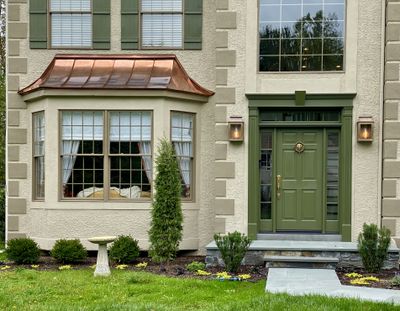
Montgomery County, PA
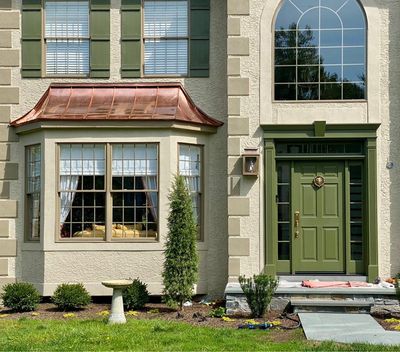
Chestnut Hill, PA
Montgomery County, PA
The Difference
In film, every scene is lit to make the audience feel something — to give depth to a flat image, to draw attention to what matters, to create a specific emotional atmosphere. Fred applies this understanding to interior spaces. He doesn't think about where to put fixtures. He thinks about what the room should feel like — and works backward from there. The result is lighting that transforms a space rather than just illuminating it.
Most residential lighting fails because of color temperature — the wrong warmth or coolness for the space, mismatched sources fighting each other, or daylight-balanced fixtures in rooms that are meant to feel warm and intimate. After decades of professional film work, Fred has an intuitive understanding of how color temperature affects perception that most electricians and even designers simply don't have.
Lighting designers typically hand off to an electrician who implements the plan — and something is usually lost in translation. Fred designs your lighting system and installs it himself. The fixture placement, the trim selection, the aiming of directional sources — all of it done by the person who conceived the design. The gap between the plan and the result is as small as it can be.
Residential lighting design as a standalone service is almost impossible to find from a contractor in the Philadelphia area. Interior designers do it, but they don't install. Electricians install, but don't design. Fred occupies a rare position: a professional who understands light at a deep level and can execute from concept to switched-on result. For homeowners who care about how their spaces feel, this matters.
Common Questions
Lighting design scope varies enormously — a single room lighting renovation might cost $1,500–$4,000. A full-home lighting design and installation can range from $8,000 to $30,000+, depending on the number of rooms, fixture quality, smart system integration, and whether new wiring is required. Fred provides a detailed estimate after seeing the space and understanding what you're trying to achieve.
An electrician installs what you specify. A lighting designer figures out what should be specified — the fixture types, placement, aiming, color temperature, dimming, and how all the elements work together as a system. Most homes with mediocre lighting have mediocre lighting because an electrician made design decisions they weren't trained to make. Fred does both: he designs the system with a professional's understanding of light, and then installs it himself.
Yes — and this is one of the most common requests he gets from owners of older homes in Chestnut Hill and Wyndmoor. Adding recessed lighting, cove systems, or exterior lighting to a home with original plaster, old-growth wood trim, and historic masonry requires genuine care and experience. Fred knows how to route wiring, make clean penetrations, and patch original materials in ways that are essentially invisible when done.
Yes. Exterior and landscape lighting is a significant part of Fred's practice. For the older homes of the Chestnut Hill and Wyndmoor corridor — with Wissahickon schist facades, mature trees, and substantial landscaping — well-designed exterior lighting is transformative. Fred designs and installs low-voltage landscape systems, facade lighting, and entry lighting that honors the home's architecture rather than fighting it.
The main cost factors are the number of rooms involved, whether new wiring is needed (many older homes in Chestnut Hill and Montgomery County have original knob-and-tube or early Romex wiring that may need upgrading), the type of fixtures (recessed cans vs. decorative pendants vs. integrated cove lighting), smart home integration (dimmers, scenes, automated controls), and how the wiring is routed without damaging original plaster, trim, or architectural details. Fred walks through all of this during the design consultation and provides a detailed estimate before any work begins.
Recessed lighting installation costs depend on how many fixtures, whether existing wiring can support them, and whether the installation requires opening ceilings (common in older homes with plaster and lath). In new construction or accessible attics, recessed lighting is straightforward. In a historic Chestnut Hill or Wyndmoor home with original plaster ceilings, careful routing and patching is needed to preserve the ceiling's integrity. Fred designs the layout to minimize disruption and provides a fixed project price — not a per-fixture estimate that grows unexpectedly.
In most cases, retrofitting existing fixtures with LED bulbs is the simplest and most cost-effective upgrade — you get 80-90% energy savings with no installation work. But if your existing fixtures are poorly placed, insufficient in number, or the wrong type for the room's function, replacing them is the better long-term investment. Fred evaluates your current lighting system and recommends the approach that actually solves the problem — whether that's a simple LED retrofit, adding new fixture locations, or a full lighting redesign.
Yes. Fred serves all of Eastern Montgomery County — Wyndmoor, Glenside, Jenkintown, Flourtown, Fort Washington, Oreland, Springfield Township, and surrounding communities. His lighting design expertise is especially valuable in the older homes common throughout this area, where adding modern lighting requires navigating original construction without damaging it. Request a free estimate through this website.
Start Your Project
If you want lighting that genuinely transforms how your space feels — designed and installed by someone who has spent a career thinking professionally about light — Fred would like to have that conversation.
Get a Free Estimate
Tell Fred what you need — he returns every call and text himself, usually within 24 hours. No call center, no crews, no spam.
What Clients Say
“We initially hired Fred to build a bedroom closet for us, and his work has been truly exceptional. His attention to detail, combined with a strong sense of aesthetics, is rare to find. He takes the time to refine every aspect of the work.”
“We had a fantastic experience working with Fred Beese! His communication was incredibly clear from start to finish, so we always knew exactly what to expect. His prices are reasonable, but what really sets him apart is his vision — he offered suggestions that elevated the final result.”
“Fred is truly an artist. He built a fence for me and collaborated every step of the way. I highly recommend him especially if you want the end result to be outstanding and beautiful.”
“Fred is an outstanding contractor. His communication skills are excellent. He keeps you informed every step of the way and is extremely easy to work with. His attention to detail really sets him apart, and it shows in the quality of his work.”
“Fred Beese has done much work for me on my house over the years both as a craftsman and as a contractor. His work is uniformly excellent. He is responsible, meticulous, very knowledgeable across the range of construction skills.”
“Fred does excellent work! He can do pretty much anything you need done from electrical to carpentry. He is a pleasure to work with.”
Tell us about your project and Fred will be in touch within 24 hours.