
Victorian, Tudor Revival, and Wissahickon schist homes restored by a builder who genuinely understands their character — and why it matters.
A Specialist, Not a Generalist
Historic home restoration in Chestnut Hill, Wyndmoor, and Montgomery County, PA runs roughly $3,000–$15,000 for a targeted project like millwork, door, or plaster restoration, and $80,000–$250,000+ for a full whole-home renovation — handled by one craftsman, Fred Beese, with 30+ years preserving Victorian, Tudor Revival, and Wissahickon schist homes.
The historic homes of Chestnut Hill, Wyndmoor, and the surrounding Springfield Township neighborhoods are among the finest residential architecture in the Philadelphia region. Victorian rowhouses, Tudor Revival estates, Craftsman bungalows built from Wissahickon schist — these are homes with original plaster walls, hand-forged hardware, slate roofs, and millwork profiles that haven't been manufactured for decades.
Most contractors don't know how to work in them. They replace what should be restored, use modern materials that look wrong in period settings, and miss the subtle details that make a historic home what it is. The result is a house that's been updated but has lost something essential.
Fred Beese Builds is different. With 30+ years of design and construction experience — including deep familiarity with the specific architectural character of the Chestnut Hill Historic District and the Wissahickon Valley — Fred approaches historic homes as a preservationist as much as a builder. The goal is always to restore, not just renovate.
Get a Free Estimate View Portfolio →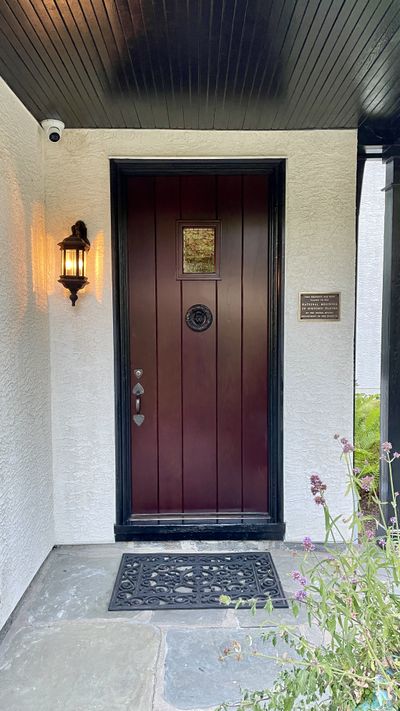
Architectural Expertise
The Victorian rowhouses and Queen Anne-style homes of Chestnut Hill date from the 1870s through early 1900s. They're defined by original plaster, elaborate millwork, transomed windows, and decorative woodwork that requires a skilled hand to repair or replicate.
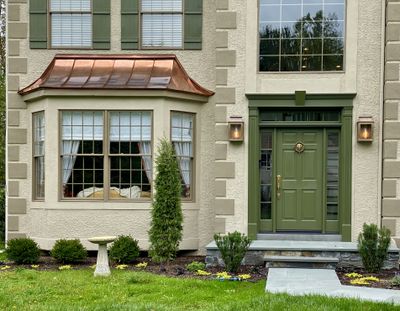
Many of Wyndmoor and Chestnut Hill's grandest homes are Tudor Revival estates — characterized by exposed timber framing, stucco and stone facades, leaded glass windows, and heavy interior woodwork. These homes have distinctive details that demand an architect's eye to restore properly.
The Craftsman bungalows of the early twentieth century celebrate natural materials, exposed structure, and honest craftsmanship. Built-in furniture, coffered ceilings, inglenooks, and custom woodwork are their defining features — and Fred is uniquely qualified to restore all of them.
Scope of Work
Fred's restoration work follows the principles established by the National Park Service's historic preservation standards — the authoritative guidance for maintaining original materials and character while making targeted improvements. Pennsylvania's Historic Preservation Office also operates under these same standards.
01
Door casings, window surrounds, crown molding, wainscoting, chair rail, and baseboards — preserved, repaired, and extended using matching profiles. Where original pieces are beyond saving, Fred replicates them in period-appropriate wood and finishes.
02
Original doors — including National Register-level entryways — restored to working condition without sacrificing their historic character. Hardware sourced, replicated, or carefully preserved. The door that's been in your home for 120 years is worth keeping.
03
Original plaster walls in historic homes have texture, mass, and character that drywall never replicates. Fred repairs plaster using traditional methods — patching, skimming, and matching the existing finish — rather than replacing it wholesale with modern materials.
04
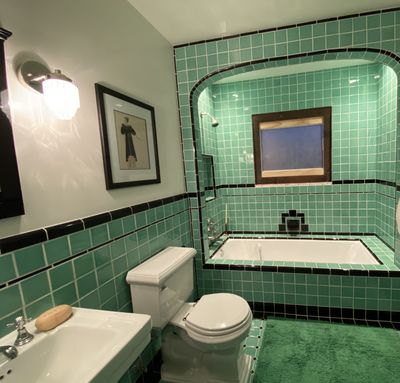
Modernizing kitchens and bathrooms in historic homes without destroying what makes them special requires real skill. Fred designs updates that are fully functional and contemporary in use while remaining authentic to the home's period character.
05
Historic homes often need updated electrical, plumbing, HVAC, and insulation integrated in ways that don't damage original fabric. Fred has extensive experience threading modern systems through old construction without compromise.
06
Whole-home renovations of historic properties — managing every trade, every detail, from design through punch list. For homeowners who want one person responsible for the whole project, Fred manages it all while keeping the home's historic character at the center of every decision.
Selected Work
Wyndmoor, PA
Montgomery County, PA
Montgomery County, PA
Featured Case Studies
01
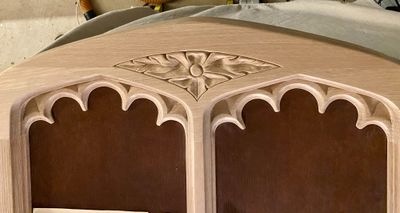
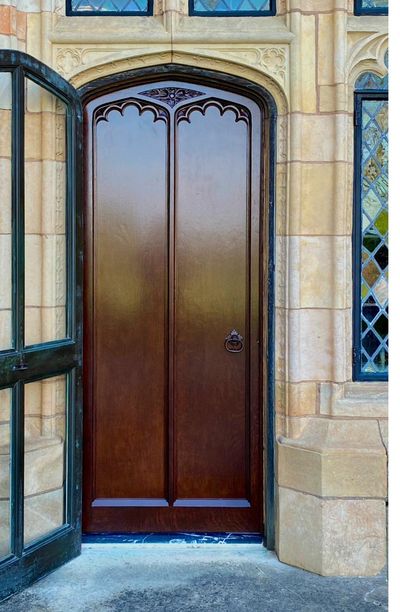
A century-old Gothic arch double door restored and its hand-carved tracery header replicated in white oak for a Wyndmoor Gothic Revival stone home.
Read Case Study →02
Two Gothic arch double doors on a Montgomery County stone chapel — structural rot repair, wrought iron hardware preservation, and traditional refinishing.
Read Case Study →"The older homes of Chestnut Hill and Wyndmoor aren't just real estate — they're the physical memory of this community. When I work in them, I take that seriously." — Fred Beese, Fred Beese Builds
Common Questions
The historic homes of Chestnut Hill and Wyndmoor have original materials — plaster walls, period millwork, hand-forged hardware, Wissahickon schist masonry — that require specialist knowledge to work with properly. Standard remodeling contractors often don't understand how to repair plaster, match historic profiles, or source period-appropriate materials. The result of using the wrong contractor in a historic home is often irreversible: original fabric destroyed, character lost. Fred's experience with the specific architectural character of this neighborhood makes a real difference in the outcome.
Yes. Fred has experience working on National Register properties in the Chestnut Hill Historic District and the surrounding area. He understands the standards that apply to these homes and works to preserve their historic integrity. If your home is locally listed or in a historic district, Fred can discuss what that means for your project and how to approach restoration work appropriately.
Absolutely — and this is one of the most important questions homeowners can ask. The answer is yes, but only if the renovation is led by someone who understands what gives the home its character in the first place. Fred's approach is to identify what makes each home distinctive — the specific millwork profiles, the plaster texture, the proportions of the rooms, the original hardware — and protect those elements while integrating modern systems and finishes that support rather than fight the home's character.
Historic restoration is inherently more involved than standard renovation — the work requires more skill, more time, and often more careful material sourcing. A targeted restoration project (historic millwork, door restoration, plaster repair) might range from $3,000 to $15,000. A full whole-home historic renovation can run $80,000 to $250,000+ depending on scope and the condition of the home. Fred provides an honest, detailed estimate after a design conversation where he can actually see the home and understand what it needs.
Fred's primary focus is the historic corridor of Northwest Philadelphia and Eastern Montgomery County — Chestnut Hill, Wyndmoor, Glenside, Flourtown, Erdenheim, Springfield Township, and nearby communities. This is the area where his hyper-local knowledge of the architectural character, the specific building materials, and the community's preservation values is most valuable. For exceptional projects, he considers work slightly beyond this area on a case-by-case basis.
The main cost drivers are the scope of work (a single room vs. whole-home), the condition of the original materials (intact plaster and millwork costs less to preserve than damaged elements that need reconstruction), whether the home is in a designated historic district (which may require specific materials and methods), accessibility of the work area (third-floor plaster restoration costs more than first-floor), and material sourcing (matching original quartersawn oak or Wissahickon schist takes time and specialized suppliers). Fred walks through all of this with you during the estimate — he won't give a number until he's actually seen the home.
In a historic Chestnut Hill or Wyndmoor home, plaster repair is almost always the better choice. Original plaster is harder, more soundproof, and more fire-resistant than drywall. It also has a subtle texture and solidity that drywall can't replicate. Removing plaster often means damaging the original lath, trim, and architectural details around it. Fred specializes in plaster repair — skim coating, patching, and stabilizing — that preserves the wall's integrity. Drywall makes sense only when the plaster is truly beyond saving, which is less common than most contractors claim.
Pennsylvania offers a Historic Preservation Tax Credit program for income-producing properties, and federal Historic Tax Credits (HTC) are available for certified rehabilitations of listed properties. For owner-occupied residential properties, these programs are more limited, but homes in designated historic districts (like the Chestnut Hill Historic District) may qualify for local incentives. Fred can discuss which preservation considerations apply to your specific home — while he's not a tax advisor, he knows the restoration standards these programs require and can help ensure your project meets them.
Look for someone who can speak specifically about the construction methods used in your home's era — not just 'old houses' in general. Ask about plaster repair (not replacement), original millwork matching, period-appropriate hardware sourcing, and experience with the specific architectural styles in your neighborhood. Ask to see completed restoration work. Fred has over 30 years of experience with the Victorian, Tudor Revival, Colonial, and Craftsman homes of Chestnut Hill, Wyndmoor, and Montgomery County — and he's happy to show you examples of his restoration work in the neighborhood.
Start Your Project
If you have a historic home that deserves to be restored rather than just renovated, Fred would like to see it. Reach out to schedule a design conversation — no pressure, no sales pitch, just an honest discussion about what your home needs and what's possible.
Get a Free Estimate
Tell Fred what you need — he returns every call and text himself, usually within 24 hours. No call center, no crews, no spam.
What Clients Say
“We initially hired Fred to build a bedroom closet for us, and his work has been truly exceptional. His attention to detail, combined with a strong sense of aesthetics, is rare to find. He takes the time to refine every aspect of the work.”
“We had a fantastic experience working with Fred Beese! His communication was incredibly clear from start to finish, so we always knew exactly what to expect. His prices are reasonable, but what really sets him apart is his vision — he offered suggestions that elevated the final result.”
“Fred is truly an artist. He built a fence for me and collaborated every step of the way. I highly recommend him especially if you want the end result to be outstanding and beautiful.”
“Fred is an outstanding contractor. His communication skills are excellent. He keeps you informed every step of the way and is extremely easy to work with. His attention to detail really sets him apart, and it shows in the quality of his work.”
“Fred Beese has done much work for me on my house over the years both as a craftsman and as a contractor. His work is uniformly excellent. He is responsible, meticulous, very knowledgeable across the range of construction skills.”
“Fred does excellent work! He can do pretty much anything you need done from electrical to carpentry. He is a pleasure to work with.”
Tell us about your project and Fred will be in touch within 24 hours.