
Master craftsman handyman services in North Wales, PA. Door repair, window restoration, trim work, and all home repairs done right. 30+ years of craftsmanship.
Handyman in North Wales, PA
Handyman services in North Wales, Montgomery County cover home repair and maintenance — door and window restoration, trim and cabinetry, kitchen and bathroom updates, deck and porch repair — performed in person by Fred Beese, a 30-year master craftsman specializing in North Wales's late-1800s to mid-century homes.
North Wales Borough sits at the crossroads of old Montgomery County and new suburban growth, where the SEPTA Lansdale/Doylestown Line pulls into the North Wales Station and deposits commuters two blocks from a downtown that has changed slowly and intentionally. The historic borough core along Main Street and Walnut Street holds some of the oldest residential fabric in upper Montgomery County — Victorian and Queen Anne houses built for railroad families in the 1880s and 1890s, with turned porch spindles, fish-scale shingle siding, and double-hung windows that still bear their original rope-and-pulley weights. Closer to the station, streetcar-era colonials from the 1920s and 1930s line streets like Seventh Street and Penn Street, their front porches sitting low and level with the sidewalk, their trim work detailed in ways that reward careful matching. Moving outward from the borough core into Upper Gwynedd Township, the housing fabric shifts: cape cods and ranches from the 1940s and 1950s fill the residential streets off Welsh Road (Route 63) and Sumneytown Pike, and the outer edges near the Montgomeryville commercial corridor along Route 309 and Route 202 turn to splits and colonials from the 1960s and 1970s. North Penn School District serves the area, and its mix of longtime borough families and newer arrivals reflects the same layering visible in the housing stock. Montgomery Mall sits just to the south, anchoring the commercial energy that makes the Montgomeryville area one of the busiest retail corridors in the county, but the borough itself stays quiet — a pocket of genuine small-town character with Simmons Park providing green space and the old Borough Hall anchoring civic identity on Main Street.
Fred first came to North Wales for a front-door restoration on a Queen Anne on Walnut Street, and the job turned into a two-week education in what the railroad-era builders of this borough were capable of. The door surround had a broken pediment with hand-carved rosette blocks, the door itself was a five-panel solid pine with a brass mortise lockset that had been painted shut sometime in the 1970s. Stripping it, fitting new weatherstripping, and re-hanging it so it swung cleanly without binding took patience and a hand plane — the kind of work that goes wrong fast if you push it. Fred has been back to North Wales steadily since. On the typical late-1800s home in North Wales, Fred watches for three issues that appear in nearly every project: window sash that have swollen and been painted shut so many times that the weight channels are now completely blocked, requiring careful parting-bead removal and sash re-weighting; porch decking where the original tongue-and-groove fir has been covered with a layer of pressure-treated pine that traps moisture against the old boards beneath, causing soft spots that look like a surface problem but run deeper; and interior door frames that have racked slightly over 130 years of seasonal movement, so doors that once latched cleanly now bind at the strike plate and need the hinge mortises shimmed or the strike repositioned rather than the door planed. These are not quick fixes, and homeowners who have tried to patch their way past them usually call Fred after the patch fails. His work in North Wales connects naturally to what he does in nearby Lansdale, where the same railroad-era housing stock shows up a mile to the west. Fred works on one project at a time. Call 323-919-0741 or use the contact form to discuss your project.
Get a Free Estimate View Main Handyman Page → North Wales Area Guide →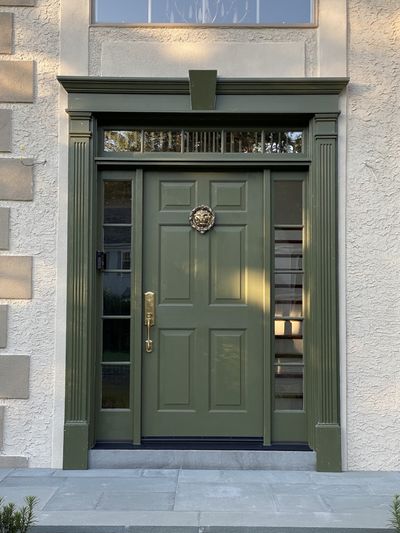
Services in North Wales, PA
Fred handles door and window repair, trim and plaster work, cabinetry, light fixtures, and general home repairs in North Wales — fixed-price estimates, no hourly surprises.
01
Custom trim installation, period-accurate baseboards, crown molding, and detailed millwork repair.
02
Cabinet repair, refinishing, custom shelving, and built-in installation and restoration.
03
Railing restoration, board replacement, refinishing, and structural repair done right.
04
Custom shelving installation, closet organization, and built-in storage solutions.
05
Drywall repair, plaster patching, and wall finishing that looks like original craft.
06
Fixture installation, period-appropriate lighting updates, and specialized rewiring.
07
Historic and contemporary doors — hardware restoration, adjustment, refinishing, and careful repair that maintains original character.
08
Sash window repair, glazing, weatherization, and restoration that preserves period windows rather than replacing them.
Recent Work Near North Wales PA
Montgomery County · 1960s–1980s Colonial & Contemporary
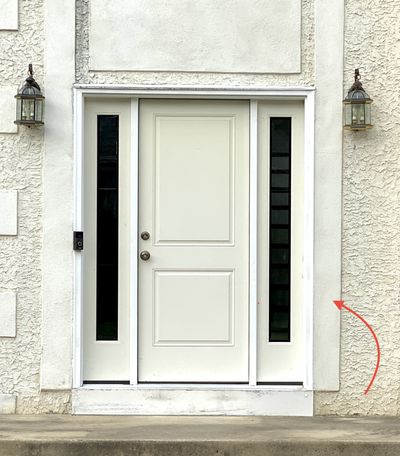
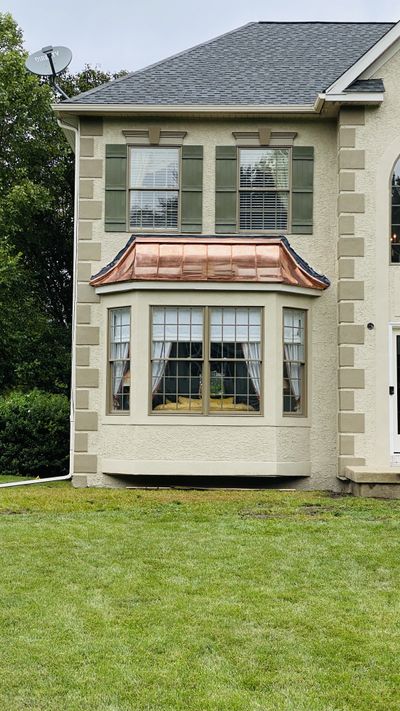
Colonial and contemporary homes from the 1960s–1980s used materials that are now entering their major maintenance cycle. Interior doors are hollow-core lauan — durable in appearance but not structurally deep. Trim is finger-jointed pine painted in the shop — it looks fine new, but the joints are points of failure when water gets in. Decks were built with pressure-treated framing and cedar or pine decking, attached to the house with ledger boards that were often installed without proper flashing. Sliding glass doors use aluminum frames with nylon wheel carriages that flatten over time. Bathrooms have ceramic tile set in thinset over drywall — not the mortar-bed installations of the postwar era, and more vulnerable to grout failure.
Hollow-core interior doors with damaged facings, sagging on worn hinges, or latching failures from frame racking — a repair that compounds if the door is painted shut or the hardware worn past adjustment
Deck ledger boards with inadequate or failed flashing — water infiltration at the house-to-deck connection is the most common source of serious structural deck rot in homes from this era
Sliding glass door track wear and seal failure — wheel carriages flatten over 30+ years and seals crack, making doors hard to operate and leaking conditioned air
Builder-grade finger-jointed pine trim with paint failure and rot at bottom corners where it meets thresholds, sills, and exterior grade
Basement wall finishing from the 1970s–80s with moisture issues — paneling and drywall installed directly against concrete block walls trap moisture and eventually fail
Bathroom vanity hardware, toilet flush valve, and faucet cartridge replacement — original 1970s fixtures wearing out across the board at similar lifespans
On a 1960s–1980s colonial, Fred looks at the deck ledger connection first — the staining pattern at the fascia where the deck meets the house tells the story. Rot at that joint is often invisible until the ledger is probed, and it means water has been sitting there for years. He checks hollow-core doors on their hinges: a door that doesn't latch properly is usually a worn strike plate, but it can also mean the frame has racked, and adjusting the hardware before understanding why the frame moved doesn't solve the problem. On sliding glass doors, he looks at the bottom track for debris accumulation and the wheel carriage for flat spots. And at exterior trim bottom corners — the finger joints open up there first.
Why Fred for North Wales's 1960s–1980s Colonial & Contemporary homes
Colonial and contemporary homes from the 1960s–1980s have predictable maintenance patterns, and Fred has worked on hundreds of them. He knows the specific failure points: deck ledger connections that were never properly flashed, hollow-core doors on worn hinges, sliding glass doors with flattened wheel carriages, finger-jointed trim with failing paint at grade. These are solvable problems with straightforward solutions — but they need to be done correctly the first time, because deferred maintenance on a deck ledger or a water-infiltrating sliding door can turn a one-day repair into a multi-week project.
Discuss Your ProjectHandyman Services Near North Wales, PA
Fred serves North Wales and the surrounding communities throughout Montgomery County. If you're in a neighboring town, Fred's service area likely covers you — reach out to confirm.
Transparent Pricing
Most handyman jobs in North Wales run $150–$800. Small repairs start around $150; window or trim work typically falls in the $350–$800 range. Fred quotes fixed prices — you know the cost before he starts.
Door adjustments, hardware installation, light fixture replacement, and minor fixes.
Window restoration, trim installation, bathroom fixture replacement, plaster repair.
Deck repair, multiple fixture installations, extensive plaster work, cabinetry repair.
Custom trim, shelving, built-in cabinetry, and specialized restoration — pricing per project.
North Wales's mix of historic Main Street properties and postwar suburban homes creates a range of project complexity. Older borough homes with period details typically require more specialized work, while surrounding suburban properties keep most repairs straightforward.
Fred works by fixed project pricing, not hourly rates. He visits your home, assesses the work, and provides a detailed estimate before starting. No surprises, no upselling — just transparent, quality work.
Common Questions
Most small handyman jobs in North Wales run $150 to $350 — things like a sticking door, a window that won't latch, or a section of trim that needs to be replaced and repainted. Mid-size projects such as deck board replacement, a bathroom vanity swap, or kitchen cabinet repair typically fall in the $350 to $800 range. Larger scopes — full porch deck replacement, multi-room trim restoration, or a window sash re-weighting project across several windows — run $800 to $2,000 or more depending on materials and time. North Wales's mix of historic Main Street properties and postwar suburban homes creates real variation: a Victorian on Walnut Street with original millwork calls for more careful material matching and slower technique than a 1960s split on the outer edge of Upper Gwynedd Township, so older borough homes typically sit at the higher end of any range.
Fred focuses on the repair and restoration work that older North Wales homes require most. His most common projects here include trim and molding repair and replacement, cabinetry work, deck and porch repair, shelving and storage installation, drywall and plaster patching, light fixture replacement, door repair and restoration, and window repair and restoration. For the Victorian and Queen Anne homes near the borough core and the North Wales Station, that often means working with original materials — solid-wood sash, rope-and-pulley window weights, mortise locksets, and period trim profiles that require custom matching rather than off-the-shelf lumber. For the cape cods and ranches further out in Upper Gwynedd, the work tends toward practical maintenance updates: squeaky subfloor repairs, sagging cabinet hinges, deck boards gone soft, bathroom fixtures that need reseating.
A straightforward repair — a door that binds, a window latch that won't engage, a section of baseboard that needs replacing — usually takes one to two days. Mid-size projects like a deck board replacement or a cabinet refresh run two to four days. More involved work on the older Victorian and Queen Anne homes in the North Wales borough core can take longer: re-weighting sash windows on a full floor of a late-1800s home, or restoring a porch with damaged railings and soft decking, can run a week or more depending on what's found once work begins. Because Fred works alone and takes one project at a time, his schedule does not get stretched across multiple sites — when he is on your project, that is where his full attention is.
Fred Beese does the work himself on every project. He is a 30-year master craftsman who takes on one project at a time, with no rotating crews and no subcontractors. When you call to discuss a North Wales job, you are talking to the person who will show up, assess the work, and complete it. There is no handoff to a crew you have never met, and no junior worker sent ahead while Fred manages jobs elsewhere.
Yes — the late-1800s and early-1900s homes near Main Street and the North Wales Station are exactly the kind of work Fred does best. These houses were built with materials and techniques that differ from modern construction: solid-wood sash windows with rope-and-pulley weight systems, plaster walls over wood lath, mortise-and-tenon door frames, and trim profiles that are no longer stocked at home centers. Fred knows how to source matching profiles, work with plaster rather than simply patching over it with drywall compound, and re-hang doors in frames that have racked over a century of seasonal movement.
In most cases, soft spots in a North Wales porch deck run deeper than they look, especially on homes where a layer of newer decking was installed over the original boards. Moisture gets trapped between the two layers and rots the original material from underneath. What shows as a slightly soft spot on the surface can hide boards that are structurally compromised across a wider area. Fred assesses the full extent of the damage before pricing the work, because porch repairs that are scoped too narrowly tend to come back within a season or two.
Re-weighting is a full restoration process, not a quick fix. The parting bead that holds the sash channel together has to be carefully removed without splitting it, then the sash is pulled from the frame and the old sash cord is replaced with new rope threaded over the pulley and tied to the cast-iron weights inside the wall cavity. The pocket cover at the base of the frame is removed to access the weights, and if any weights are missing or mismatched the sash will not balance correctly. Fred typically recommends addressing all windows on a floor at the same time if the ropes are failing, because once the first ones go the rest follow quickly.
Yes. The 1940s through 1960s cape cods and ranches in Upper Gwynedd Township have their own maintenance patterns: squeaky subfloors where the original nails have worked loose from the joists, bathroom surrounds where the original tile was set in a thick mortar bed that makes repairs tricky, and kitchen cabinets with worn face-frame joints that cause doors to sag. These houses are solidly built but they are at the age where deferred maintenance starts showing up in multiple places at once. Fred handles the full range of repair and update work on these properties.
Scheduling varies by season. Spring and fall tend to be busiest — deck repairs after winter, exterior carpentry before the cold returns — and Fred can run two to four weeks out during those periods. Winter is often more flexible, with interior work like trim, cabinetry, and plaster repair filling the schedule. The best approach is to call 323-919-0741 or submit the contact form as soon as you know the work needs doing, even if you are not ready to start immediately. Fred can give you a realistic timeline during the initial conversation.
Yes. Matching original trim is one of the more specific skills that comes up regularly on the Victorian and Queen Anne homes near the North Wales borough core. Fred uses hand planes and router setups to match profiles that are no longer available off the shelf, and he has sources for custom-milled millwork when the profile is complex enough to warrant it. The goal is a repair that blends into the existing trim rather than one that reads as a patch, which matters on houses where the trim is a significant part of the character.
Yes. Plaster repair is common on the pre-war homes in the North Wales borough core, where walls and ceilings are original plaster over wood lath rather than drywall. Cracks that run along lath lines, sections where the plaster has keyed loose from the lath, and areas around windows where seasonal movement has opened gaps are all things Fred patches using compatible plaster materials rather than skimming drywall compound over them. Drywall compound applied over old plaster tends to crack and fail because the movement characteristics are different; a proper plaster patch lasts.
Yes. Fred does an in-person assessment before any project begins, which is the only reliable way to price work on older homes where conditions behind the wall or under the deck are not always what they appear. After seeing the work, he will give you a clear scope and cost before anything starts. There are no hourly billing surprises — you know what the project covers and what it costs before Fred picks up a tool.
Handyman North Wales, PA
Fred works with a small number of North Wales clients at a time — which means your project gets his full attention, expertise, and 30+ years of craftsmanship. Reach out to discuss what your home needs.
Get a Free Estimate
Tell Fred what you need — he returns every call and text himself, usually within 24 hours. No call center, no crews, no spam.
What Clients Say
“We initially hired Fred to build a bedroom closet for us, and his work has been truly exceptional. His attention to detail, combined with a strong sense of aesthetics, is rare to find. He takes the time to refine every aspect of the work.”
“We had a fantastic experience working with Fred Beese! His communication was incredibly clear from start to finish, so we always knew exactly what to expect. His prices are reasonable, but what really sets him apart is his vision — he offered suggestions that elevated the final result.”
“Fred is truly an artist. He built a fence for me and collaborated every step of the way. I highly recommend him especially if you want the end result to be outstanding and beautiful.”
“Fred is an outstanding contractor. His communication skills are excellent. He keeps you informed every step of the way and is extremely easy to work with. His attention to detail really sets him apart, and it shows in the quality of his work.”
“Fred Beese has done much work for me on my house over the years both as a craftsman and as a contractor. His work is uniformly excellent. He is responsible, meticulous, very knowledgeable across the range of construction skills.”
“Fred does excellent work! He can do pretty much anything you need done from electrical to carpentry. He is a pleasure to work with.”
Tell us about your project and Fred will be in touch within 24 hours.