
Master craftsman handyman services in Ambler & Blue Bell, PA. Door repair, window restoration, trim work, and all home repairs done right. 30+ years of craftsmanship.
Handyman in Ambler & Blue Bell, PA
Handyman services in Ambler & Blue Bell, Montgomery County cover home repair and maintenance — door and window restoration, trim and cabinetry, kitchen and bathroom updates, deck and porch repair — performed in person by Fred Beese, a 30-year master craftsman specializing in Ambler & Blue Bell's late-Victorian to mid-century homes.
Ambler borough and Blue Bell sit about two miles apart on Route 202 in Montgomery County, yet they represent genuinely different chapters of suburban Philadelphia history. Ambler grew up around the Keasbey and Mattison asbestos manufacturing complex, and the housing stock that lines Butler Pike, Lindenwold Avenue, and the streets radiating off Ambler's Main Street reflects that mill-town prosperity: solid brick twins, narrow-lot row homes, and detached squares built between roughly 1890 and 1940. The Upper Dublin School District serves the eastern residential blocks, while the Wissahickon School District covers a swath of properties closer to the Blue Bell line. The SEPTA Lansdale/Doylestown Regional Rail line stops at Ambler Station on Spring Garden Street, making the downtown walkable and transit-connected in a way that almost no other Montgomery County community matches — a character that has preserved the borough's commercial Main Street with its mix of restaurants, galleries, and independent shops rather than letting it hollow out the way less-connected communities did. Trinity Lutheran Church and the Ambler Theater are anchor landmarks on Butler Avenue that tell you something about the age and civic identity of the building stock around them. Blue Bell, by contrast, is an unincorporated Whitpain Township community that grew primarily during the 1950s through 1980s, following the Route 202 corridor as car ownership reshaped the landscape. The Blue Bell Country Club, which dates to 1914 but whose surrounding residential development is largely postwar, anchors a neighborhood of colonials, split-levels, and contemporaries on generous half-acre and acre lots. Penllyn Pike and Skippack Pike form the arterial grid, and there is almost no transit — Blue Bell is Montgomery County at its most suburban, with properties that are spacious and leafy but that require a car for everything. Welsh Road and Horsham Road push north toward Horsham Township, while the Whitpain Hills development and the streets around Blue Bell Pike carry 1960s and 1970s colonials in good repair. The two communities together create a service geography that spans tight urban-scale boroughs and open estate-lot suburbia within a very short drive.
Fred notices something consistent when he works in Ambler's downtown residential blocks: the homes look solid from the street, and they are, but whoever built them in 1910 or 1925 did not anticipate that a window would go unrepaired for three or four decades. The original wood double-hung sashes are still there in many cases — the frames plumb, the mortise joints mostly tight — but the glazing compound has long since chalked out, the sash weights are frozen in their pockets, and the bottom rails have softened from years of condensation sitting in the sill pocket. Fred has re-glazed and freed up enough of these windows on Butler Avenue and Lindenwold Avenue to know the pattern cold. On the typical late-Victorian and early-Colonial Revival home in Ambler, Fred watches for three issues that owners often miss until they become serious: wood rot concentrated at the sill plate and lower door casing where splash-back has been wicking moisture into the framing for years, plaster cracks along the party wall on twin homes that track a shared foundation settling slightly differently on each side over decades, and cabinet door alignment that looks like a hinge problem but is actually a floor system that has moved just enough to rack the face frame out of square. In Blue Bell the scale shifts but the discipline is the same — larger colonials from the 1960s and 1970s present their own recurring patterns, particularly deck ledger connections that were never properly flashed when the deck was added and deferred trim painting that has let water into the fascia and rake boards. Fred works across both communities with equal ease; just across the border in Fort Washington, the same mix of mid-century colonials and older Victorian-era homes appears, and the repair patterns carry right over. Fred works on one project at a time. Call 323-919-0741 or use the contact form to discuss your project.
Get a Free Estimate View Main Handyman Page → Ambler & Blue Bell Area Guide →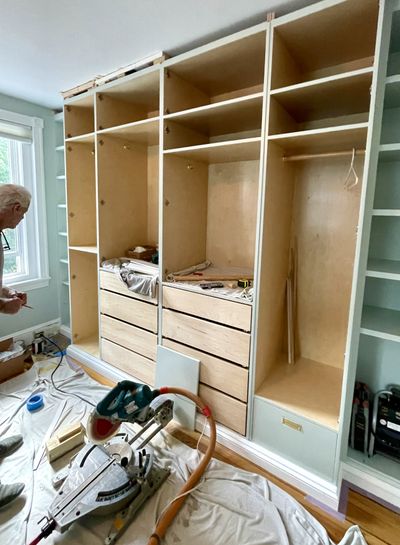
Services in Ambler & Blue Bell, PA
Fred handles door and window repair, trim and plaster work, cabinetry, light fixtures, and general home repairs in Ambler & Blue Bell — fixed-price estimates, no hourly surprises.
01
Cabinet repair, refinishing, custom shelving, and built-in installation and restoration.
02
Railing restoration, board replacement, refinishing, and structural repair done right.
03
Custom shelving installation, closet organization, and built-in storage solutions.
04
Drywall repair, plaster patching, and wall finishing that looks like original craft.
05
Fixture installation, period-appropriate lighting updates, and specialized rewiring.
06
Historic and contemporary doors — hardware restoration, adjustment, refinishing, and careful repair that maintains original character.
07
Sash window repair, glazing, weatherization, and restoration that preserves period windows rather than replacing them.
08
Cabinet refinishing, hardware installation, countertop updates, and practical improvements without full-scale renovation.
Recent Work Near Ambler & Blue Bell PA
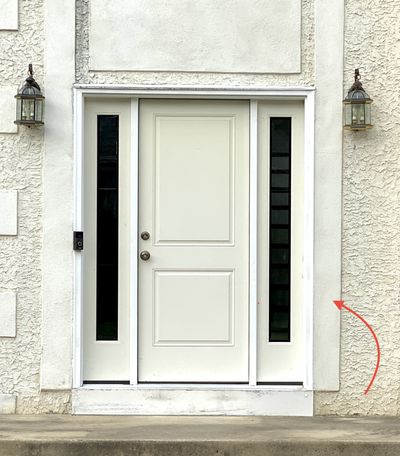
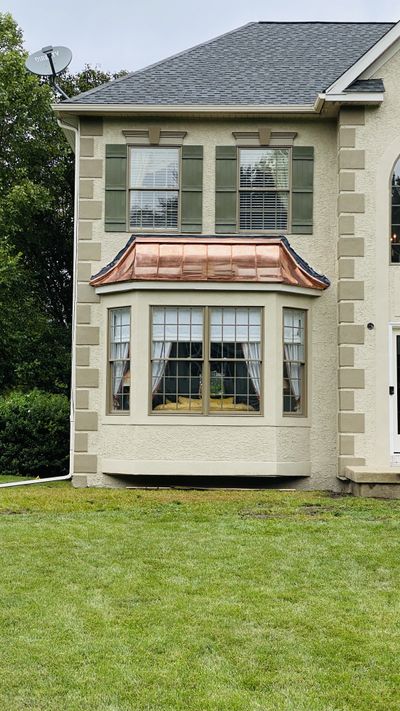
Montgomery County · 1920s–1940s Tudor Revival & Colonial Revival
Tudor Revival and Colonial Revival homes from the 1920s–1940s were built with high-quality materials by the standards of the era: old-growth red oak and white oak floors, solid brick or brick-with-stucco veneers, plaster-over-lath interiors, and original steel casement windows with divided light glazing. Built-in cabinetry — bookcases, buffets, china closets — was constructed with mortise-and-tenon joinery and solid-wood drawer sides. The heating systems were coal-fired converted to oil, then converted to gas, leaving layers of mechanical history behind walls and under floors. Cast iron radiators remain on most of these homes; the plumbing serving them is typically steel or early copper.
Steel casement window rust at hinges and frames, failed glazing compound, and operators that no longer hold the sash at a fixed position
Original hardwood floor gaps from seasonal movement and finish worn through at traffic areas — particularly at thresholds and in front of exterior doors
Built-in cabinetry with failing mortise-and-tenon joints, worn finish, and missing or period-mismatched hardware
Stucco cracking at window head corners — hairline to moderate cracks from seasonal movement allow water into the wall cavity behind the stucco membrane
Original plaster ceiling medallions and decorative plasterwork with failing keys and hairline surface fractures
Oil-to-gas boiler conversion remnants — old steam radiator valves and unconverted drip traps that affect baseboard and floor repair in adjacent spaces
On a 1920s–1940s home, Fred looks at the steel casement windows first — the hinge points rust from the inside out, and by the time you see it on the surface, the hinge is already failing. He checks built-in cabinet backs where they meet the wall: humidity cycles loosen the back panel from the frame over 80+ years, and a cabinet that looks solid can be structurally compromised at the back joints. On stucco homes, he looks at the corner bead above every window opening — that's where water concentrates and stucco cracks begin. And he checks floor thresholds between original hardwood and any addition: the seasonal movement differential is where gaps open widest and finish wears through fastest.
Why Fred for Ambler & Blue Bell's 1920s–1940s Tudor Revival & Colonial Revival homes
Fred understands the construction vocabulary of Colonial Revival and Tudor homes — the proportions of original built-in cabinetry, the correct profiles for 1920s–1930s window and door casing, the right approach to steel casement maintenance and glazing. These homes were built to last a century, and the right repair work extends that expectation. He matches existing trim profiles, sources period-compatible hardware, and approaches plaster repairs with the same setting-type compound the original plasterers used — because matching the hardness and texture of original plaster is what makes a repair invisible.
Discuss Your ProjectHandyman Services Near Ambler & Blue Bell, PA
Fred serves Ambler & Blue Bell and the surrounding communities throughout Montgomery County. If you're in a neighboring town, Fred's service area likely covers you — reach out to confirm.
Transparent Pricing
Most handyman jobs in Ambler & Blue Bell run $150–$800. Small repairs start around $150; window or trim work typically falls in the $350–$800 range. Fred quotes fixed prices — you know the cost before he starts.
Door adjustments, hardware installation, light fixture replacement, and minor fixes.
Window restoration, trim installation, bathroom fixture replacement, plaster repair.
Deck repair, multiple fixture installations, extensive plaster work, cabinetry repair.
Custom trim, shelving, built-in cabinetry, and specialized restoration — pricing per project.
Ambler's compact borough Victorians and Blue Bell's larger estate properties create a wide range of project scales. Borough homes involve tighter access and more detailed period work, while Blue Bell's larger properties may involve greater material quantities for the same type of repair.
Fred works by fixed project pricing, not hourly rates. He visits your home, assesses the work, and provides a detailed estimate before starting. No surprises, no upselling — just transparent, quality work.
Common Questions
Most handyman jobs in Ambler and Blue Bell fall into three ranges: small repairs (a door re-hang, a single window re-glaze, a light fixture swap) run $150-$350; medium projects (plaster patching and repainting a room, a deck board replacement, cabinet refacing on one run) run $350-$800; larger scopes (full deck repair, multi-room trim restoration, kitchen update with new hardware and lighting) run $800-$2,000 or more. Ambler borough work often involves older materials — original plaster, period millwork, antique window sash — that take more time and care than modern replacements would. Blue Bell properties tend to involve larger material quantities for the same repair type given the bigger footprint and longer runs of trim, fascia, or deck board.
The services Fred performs most frequently in Ambler and Blue Bell, in rough order of demand, are: cabinetry work including face-frame repair and door alignment, deck and porch repair, shelving and storage installation, drywall and plaster repair, light fixture installation, door repair and restoration (including original wood entry and interior doors), window repair and restoration, and kitchen updates including hardware, trim, and minor cabinet modifications. Fred does not do plumbing, electrical panel work, roofing, or HVAC. He works on one project at a time and takes on jobs where craftsmanship and careful material matching matter.
A small repair — a sticky door, a single cracked plaster patch, a light fixture replacement — typically takes two to four hours and is done in a single visit. A medium project, such as re-glazing several windows on an Ambler twin or replacing rotted deck boards on a Blue Bell colonial, usually runs one to two full days. Larger scopes, like a full deck rebuild, a multi-room trim restoration, or a kitchen update with new cabinetry work and lighting, may run several days spread across a week or two. Because Fred works alone and takes on one project at a time, scheduling is straightforward and there are no crew-coordination delays.
Fred Beese does the work himself on every project. He is a 30-year master craftsman who takes on one project at a time, with no rotating crews and no subcontractors. When you call 323-919-0741 to discuss a job in Ambler or Blue Bell, you are talking to the person who will show up at your door and do the work.
Yes — window restoration on original wood sash is one of Fred's core skills. Most of Ambler's pre-war housing stock still has its original double-hung windows, and in many cases the frames and sash are structurally sound even when the glazing compound has failed, the sash cords have broken, or the bottom rails have begun to soften. Fred re-glazes sash, frees frozen weight pockets, replaces sash cord, consolidates soft wood with epoxy filler, and reseats sash so they operate smoothly. Restored wood windows, properly re-glazed and painted, outperform replacement vinyl on historic homes and preserve the character of the original architecture.
Yes. Most homes built in Ambler before about 1950 have three-coat lime plaster over wood lath, and Fred repairs plaster rather than defaulting to drywall patches. Plaster repair done correctly — with the right base coat, scratch coat, and finish — blends in a way that a drywall inset patch never quite does, especially on walls with a sand or skip-trowel finish. Common jobs include cracks along party walls in twins, water-stain patches after a roof or plumbing leak is resolved, and corner bead damage from furniture or door swing.
Decks added to 1960s and 1970s Blue Bell colonials commonly have three recurring problems. First, the ledger-to-house connection was often never properly flashed, so water has been sitting against the rim joist and band board for decades — Fred assesses whether the framing behind the ledger needs consolidation or replacement before redecking. Second, the decking boards themselves are often original pressure-treated lumber that has checked, cupped, or gone punky at the end grain; Fred replaces boards selectively or full-surface depending on what the inspection shows. Third, the post bases are often sitting in direct soil contact or in undersized hardware that has corroded — post base replacement is typically part of a thorough deck repair in this era of construction.
Homes built before 1978 — which covers essentially all of Ambler borough and much of the surrounding pre-war residential neighborhood — are likely to have lead paint on windows, doors, and trim. Fred uses EPA RRP-compliant work practices for projects that disturb painted surfaces on pre-1978 homes: plastic containment, HEPA vacuum, wet scraping techniques, and proper waste disposal. If your home is older and you have young children or are pregnant, let Fred know when you call so the scope and approach can be discussed explicitly before work begins.
Yes. Ambler borough sits across two school districts — Upper Dublin to the east and Wissahickon to the west — and Fred works throughout both sides of that line. The housing stock is consistent across the borough regardless of which district a street falls in: primarily 1900-1940 construction with brick and frame twins, row homes along the denser blocks near the station, and detached colonials and foursquares on the larger lots. Fred is equally comfortable working on a tight-lot twin off Lindenwold Avenue or a larger detached home on the Wissahickon side.
Yes — partial kitchen updates are a strong fit for Fred. Common requests in Blue Bell colonial kitchens include: realigning cabinet doors that have racked over time (often a framing or floor issue, not just a hinge issue), adding custom shelving or a built-in pantry section to an existing cabinet run, replacing door and drawer hardware with better-quality pulls and hinges, and installing new under-cabinet or pendant lighting. Fred does not do full cabinet installation from scratch or countertop fabrication, but targeted cabinetry improvements that make an existing kitchen function and look significantly better are exactly the kind of project he takes on.
Availability varies by season and current project load. Spring and fall tend to book out two to four weeks in advance; winter is typically more open. Because Fred works alone and takes on one project at a time, his schedule is straightforward to discuss directly. Call 323-919-0741 to get a current sense of lead time for your specific scope — smaller single-day jobs sometimes fit into gaps between larger projects more quickly than a multi-week estimate might suggest.
Yes. Montgomery County has a number of older properties in and around both Ambler borough and the rural edges of Whitpain Township — farmhouses, carriage houses, and early colonial-era stone buildings that predate the mill-town era entirely. Fred has worked on stone foundation pointing, heavy timber framing repair, wide-plank floor consolidation, and period door and window restoration on properties of this type. The same principle applies as on Ambler row homes: he approaches older materials as worth preserving and repairing rather than replacing with modern substitutes.
Handyman Ambler & Blue Bell, PA
Fred works with a small number of Ambler & Blue Bell clients at a time — which means your project gets his full attention, expertise, and 30+ years of craftsmanship. Reach out to discuss what your home needs.
Get a Free Estimate
Tell Fred what you need — he returns every call and text himself, usually within 24 hours. No call center, no crews, no spam.
What Clients Say
“We initially hired Fred to build a bedroom closet for us, and his work has been truly exceptional. His attention to detail, combined with a strong sense of aesthetics, is rare to find. He takes the time to refine every aspect of the work.”
“We had a fantastic experience working with Fred Beese! His communication was incredibly clear from start to finish, so we always knew exactly what to expect. His prices are reasonable, but what really sets him apart is his vision — he offered suggestions that elevated the final result.”
“Fred is truly an artist. He built a fence for me and collaborated every step of the way. I highly recommend him especially if you want the end result to be outstanding and beautiful.”
“Fred is an outstanding contractor. His communication skills are excellent. He keeps you informed every step of the way and is extremely easy to work with. His attention to detail really sets him apart, and it shows in the quality of his work.”
“Fred Beese has done much work for me on my house over the years both as a craftsman and as a contractor. His work is uniformly excellent. He is responsible, meticulous, very knowledgeable across the range of construction skills.”
“Fred does excellent work! He can do pretty much anything you need done from electrical to carpentry. He is a pleasure to work with.”
Tell us about your project and Fred will be in touch within 24 hours.